
Electrified Ports: The Missing Pillar of Europe’s Strategic Autonomy
Throughout 2026, members of PEMA’s Board of Directors will offer their perspectives on the ports industry, covering a variety of topics aligned with their professional specialities.

Continuing our series is Prof. Maurizio Bragagni OBE, who offers his perspective on the topic of electrified ports.
Prof. Maurizio Bragagni OBE is Chairman & CEO of Tratos UK Ltd and a member of the PEMA Board. With over 25 years of experience in the energy, infrastructure and manufacturing sectors, he specialises in port electrification, power networks, industrial resilience and advanced cable technologies. He also serves as Honorary Consul of the Republic of San Marino to the United Kingdom, Alternate Governor of the European Bank for Reconstruction and Development (EBRD) and Honorary Senior Visiting Fellow at Cass Business School, London.
How shore power, resilient electrical infrastructure and smarter monitoring systems are transforming ports from logistics hubs into strategic energy hubs.
As the maritime industry embraces automation, electrification, and sustainability, one question deserves greater attention: should shore power become compulsory across European ports?
My answer is increasingly yes.
The debate surrounding shore power often focuses on environmental benefits. These are important. Allowing vessels to switch off their auxiliary engines while berthed significantly reduces local emissions, noise pollution, and fuel consumption. Communities surrounding ports benefit from cleaner air, while ship operators improve their environmental performance.
“The most compelling argument for shore power is not environmental. It is strategic.”
Europe has experienced significant disruptions in recent years. Energy price volatility, geopolitical tensions, supply chain challenges, and increasing global competition have exposed vulnerabilities that many industries previously ignored. In a recent academic paper on Europe’s economic future, my co-authors and I argued that Europe must invest in strategic infrastructure, energy independence, industrial resilience, and technological leadership if it wishes to remain competitive in the coming decades.
Ports sit at the centre of this challenge. Every container, every piece of equipment, every automated process and every digital system ultimately depends on one critical resource: reliable electrical power.
The modern port is becoming one of the most energy-intensive industrial environments in Europe. Electrified cranes, automated guided vehicles, battery charging systems, digital monitoring platforms, and future hydrogen infrastructure all require robust electrical networks capable of operating continuously and safely. As ports become smarter, their dependence on electricity increases.
This creates a second challenge that receives less attention: resilience. The future port cannot simply be electrified: it must be resilient. A temporary power interruption in an automated terminal can have consequences far beyond the immediate downtime. Delays ripple through shipping schedules, logistics networks, and supply chains. In an increasingly interconnected world, reliability has become just as important as efficiency.
This is where advanced cable technologies and monitoring systems play a critical role. At Tratos, we have supplied specialised cable systems to ports and container terminals around the world for many years. Through our TRATOSFLEX range, we support crane operations, reeling systems, automated handling equipment, and shore power installations operating in some of the most demanding maritime environments.
These applications have demonstrated that electrification alone is not enough. Infrastructure must also be designed for continuous monitoring, predictive maintenance, and long-term resilience.
“Cable monitoring transforms maintenance from a reactive activity into a strategic operational advantage.”
Modern monitoring systems can detect mechanical stress, temperature variations, insulation degradation, and other early warning signs before a failure occurs. Rather than waiting for equipment to break, operators can intervene proactively, reducing downtime, maintenance costs, and operational disruption. In many respects, cable monitoring should be viewed in the same way as predictive maintenance for engines or machinery.
Cybersecurity also becomes increasingly important as ports become more connected. Every digital sensor, monitoring platform, and automation system creates additional points of vulnerability. As the maritime sector adopts smart energy grids and digital infrastructure, cybersecurity must become a core element of operational resilience rather than an afterthought.
This is why I believe Europe should move progressively towards widespread adoption of shore power infrastructure, not only because it supports sustainability objectives, but because it strengthens energy security, improves operational resilience, and reinforces Europe’s industrial competitiveness.
Throughout history, ports connected nations through trade. In the future, they will connect logistics, energy, and digital infrastructure into a single ecosystem.
Those who invest in electrification today are not merely reducing emissions. They are building the foundations of the next generation of maritime competitiveness.
How Shore Power Supports the Port of the Future
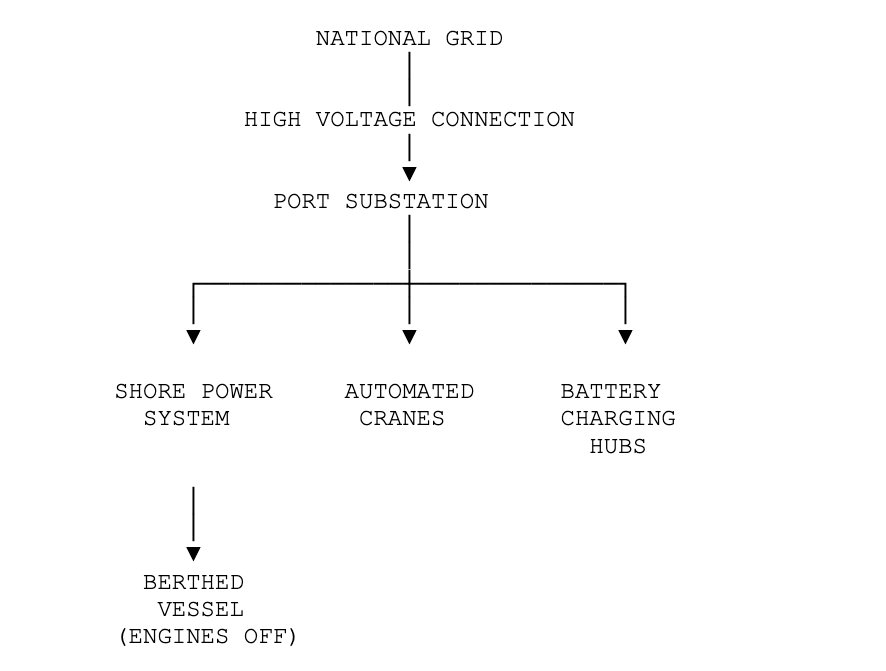
Modern ports are evolving into integrated energy hubs. Shore power allows vessels to connect directly to the local electricity network while berthed, reducing emissions and supporting a resilient, electrified port ecosystem.
Benefits:
✓ Reduced emissions
✓ Lower noise pollution
✓ Improved air quality
✓ Reduced fuel consumption
✓ Greater energy security
✓ Enhanced operational resilience
✓ Support for port automation
✓ Contribution to EU decarbonisation goals
We thank PEMA Board Member, Prof Maurizio Bragagni OBE for taking the time to compose this insightful piece on the future of maritime handling equipment.
Connecting Minds. Leading the Industry.
Port Equipment Manufacturers Association (PEMA)