
PEMA Discusses Industry Cyber Resilience at TOC Europe 2026
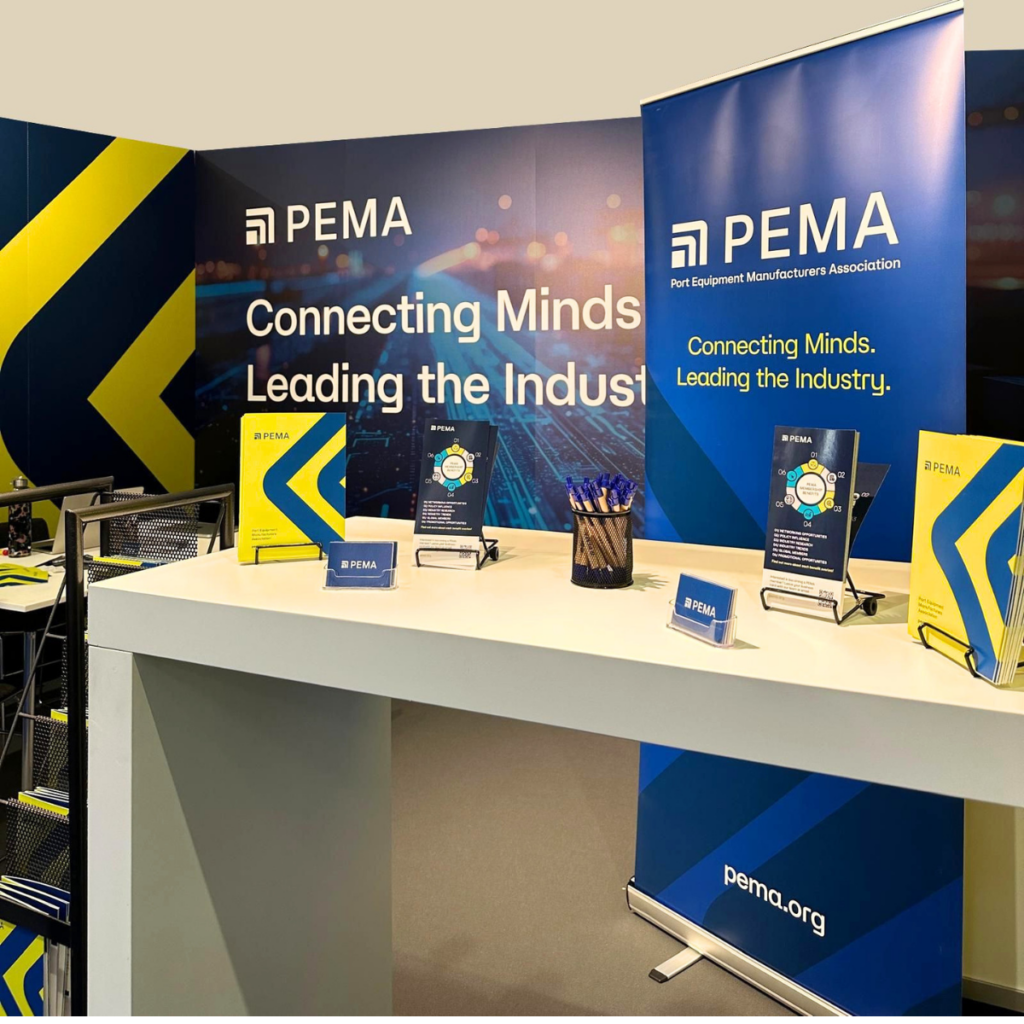
PEMA President Achim Dries, and Head of Technology Pat O’Leary Discuss Cyber Resilience in Port Equipment Design & Manufacturing
This May, the Port Equipment manufacturers Association headed to TOC Europe in Hamburg, Germany. Over the three days of conference, the Head of Technology, Pat O’Leary, and Administration, Marketing & Communications Team Caroline Doyle and Karen Cloke welcomed PEMA members, visitors, exhibitors and prospective members to the PEMA stand for insightful discussion, partnership opportunities and membership enquiries. It was a truly productive week with likeminded individuals creating valuable relations within the port and terminal equipment and manufacturing industry.
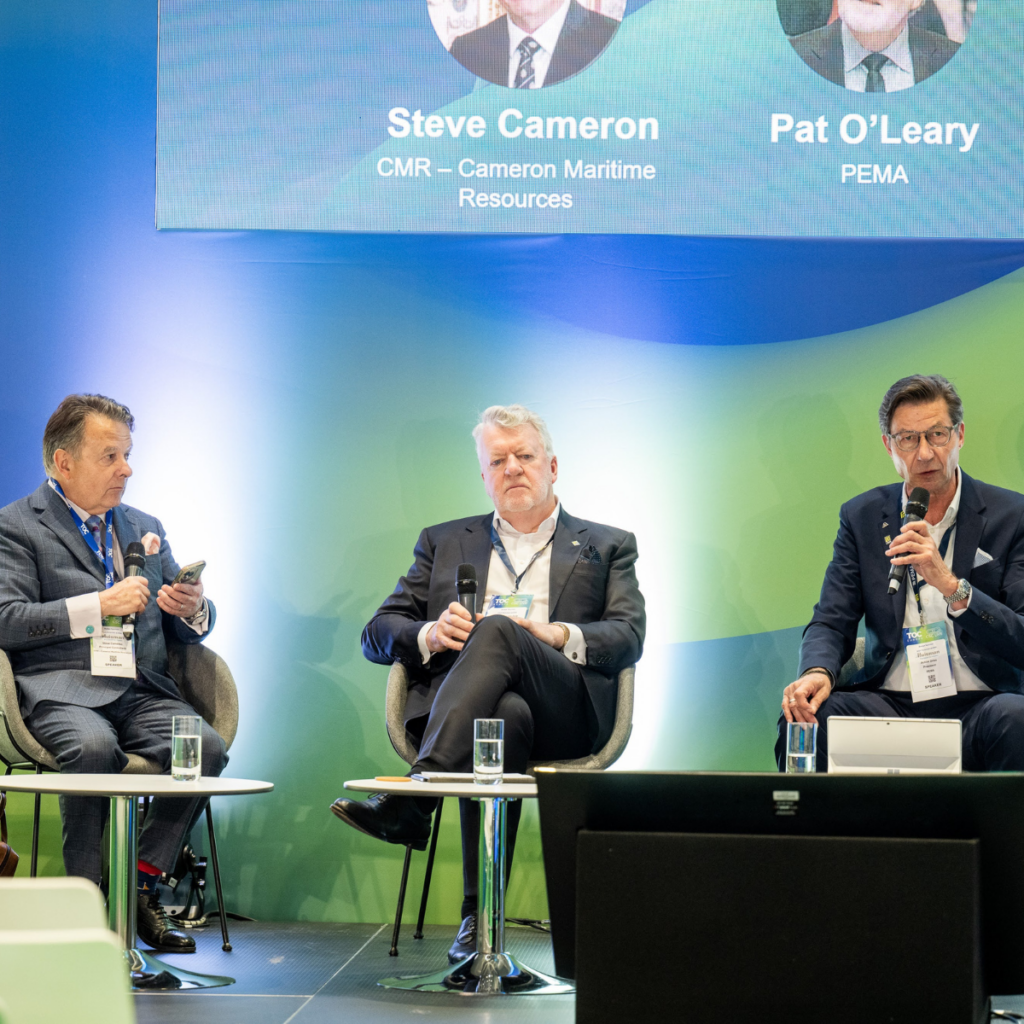
PEMA in conversation with Steve Cameron at the TECH TOC Theatre
On Wednesday 20th May, the Port Equipment Manufacturers Association (PEMA) took centre stage at the TECH TOC Theatre with a thought-provoking discussion on the incorporation of cyber resilience in port equipment design and manufacturing. Moderated by Steve Cameron of Cameron Maritime Resources, the session was introduced as “probably one ofthe most important sessions at this event, as cybersecurity affects us all.”
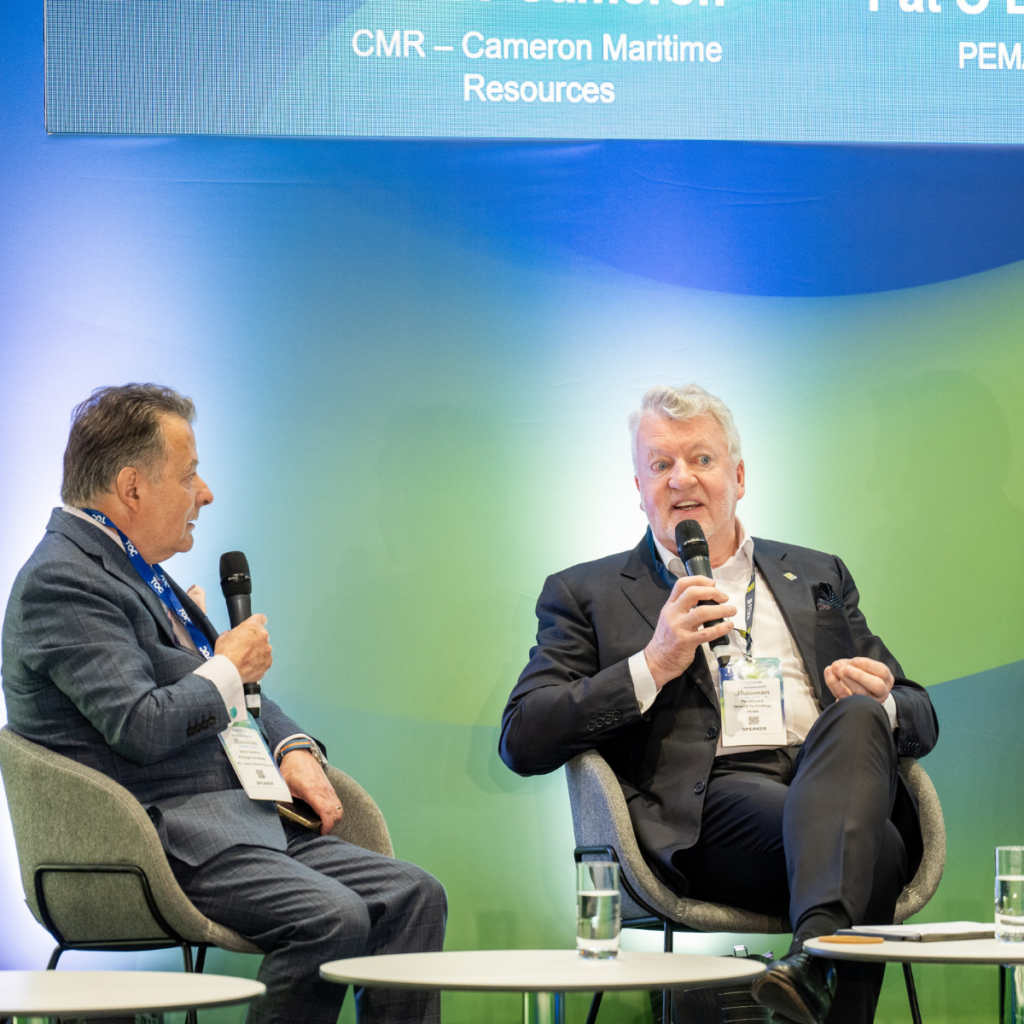
Exploring rapidly evolving cybersecurity facing the industry
Representing PEMA were President Achim Dries and Head of Technology Pat O’Leary, who explored the rapidly evolving cybersecurity landscape facing ports, terminals, and equipment manufacturers. The discussion highlighted how cyber threats have developed beyond traditional data security concerns and now pose significant operational risks to terminal and port activities worldwide.
“Cyber attacks used to be a data issue, but now they impact operations,” said Achim Dries. As digitalisation, automation, and connectivity continue to transform port operations, cyber resilience has become a critical element of equipment design, deployment, and lifecycle management.
Key challenges
A key challenge identified during the discussion is the industry’s extensive installed base of legacy equipment. While new machinery can be designed with cybersecurity requirements in mind, upgrading existing equipment presents a far more complex task. “The biggest issue we face is that we have to deal with legacy products,” Achim Dries explained. “How can we upgrade or retrofit them in a harmonised way? It is a huge problem that we have to deal with.”
PEMA is supporting the industry through it’s white paper publications
PEMA is actively supporting the industry through the development of technical guidance and white papers designed to help stakeholders understand and implement emerging cybersecurity regulations. Pat O’Leary highlighted PEMA’s recently published Information Paper IP31 on Cybersecurity, which provides practical guidance on how cybersecurity requirements and regulations can be applied to port equipment throughout its lifecycle.
The panel also explored the industry’s gradual shift from equipment monitoring towards greater levels of automated control and autonomous operation. As terminals increasingly adopt connected technologies, participants discussed the importance of ensuring that cybersecurity considerations are embedded into equipment design from the outset rather than addressed as an afterthought.
Looking ahead
Looking ahead, Achim Dries shared his vision for the future of terminal operations. “I envision that the future of terminals is that they will be powered by AI,” he said, noting that regulatory frameworks will need to evolve alongside technological advances to ensure that innovation can be adopted safely and securely.
The discussion further emphasised that technology alone cannot eliminate cyber risk. Effective cybersecurity depends equally on people and processes, with poor operational practices and system mismanagement often creating opportunities for cyberattacks. To address this challenge, Achim Dries announced PEMA’s intention to develop a future white paper focused on workforce training and awareness, helping organisations reduce their exposure to ransomware and other cyber threats through improved cyber hygiene and operational practices.

Emerging topics of BCIs
The session concluded with a look even further into the future. Pat O’Leary raised the emerging topic of Brain-Computer Interfaces (BCIs), questioning how cybersecurity frameworks may need to adapt as human-machine interaction evolves. “If you can tell your computer what to do, it can equally tell you what to do,” he noted, highlighting the complex ethical and security challenges that next-generation technologies could present for industry and society alike.
The discussion reinforced the importance of proactive collaboration across the port and terminal ecosystem. Through initiatives such as technical guidance documents, information papers, and industry-led working groups, PEMA continues to support manufacturers, terminal operators, and stakeholders in building a more cyber-resilient future for the global ports industry.